


How Recent South Dakota Workers’ Compensation Rulings Have Reduced Bad‑Faith Exposure for Insurers

South Dakota has experienced a multi‑year cycle in which plaintiff attorneys increasingly attempted to frame ordinary investigative steps—covert surveillance, medical canvasses, activity checks, and IME reliance—as evidence of insurer “bad faith.” This created hesitation among some claims teams, particularly in workers’ compensation, where verifying claimant activity is essential.

The 2024–2025 South Dakota Department of Labor & Regulation (DOL) decisions mark a clear shift back toward a strict, evidence‑driven standard. These rulings consistently affirm that insurers are protected when they investigate, document, and rely on objective evidence. The result is a legal environment where covert surveillance and other investigative methods are now less likely to trigger viable bad‑faith claims.
The Legal Standard: How South Dakota Defines Bad Faith
South Dakota courts have long held that bad faith requires two elements:
An unreasonable denial of benefits, and
Knowledge or reckless disregard of the lack of a reasonable basis.
This standard was established in Hein v. Acuity (2007) and refined in Mordhorst v. Dakota Truck Underwriters (2016). For years, plaintiff attorneys attempted to stretch Mordhorst into a broader rule, arguing that investigative steps—especially surveillance and IMEs—could themselves be “unreasonable.”
The 2024–2025 DOL decisions push firmly in the opposite direction.
The 2024–2025 Workers’ Compensation Decisions That Matter
These DOL rulings do not use the term “bad faith,” because the DOL cannot adjudicate tort claims. But they determine whether an insurer acted reasonably—the exact standard courts use to evaluate bad‑faith lawsuits. Each case reinforces that investigation protects insurers, and none suggest that surveillance or canvassing creates exposure.
Olivares‑Guzman v. Ten Corp. & ACMO Insurance (HF No. 62, 2024/25)
Decision Date: October 31, 2025
The DOL upheld the insurer’s reliance on medical evidence and found the claimant’s subjective reports inconsistent with objective findings.
Confirms insurers may dispute causation when evidence is mixed.
Reinforces that documented medical review is reasonable.
Bad‑faith implication: A later bad‑faith claim would fail because the insurer’s investigation was thorough and evidence‑based.
Akiona‑Loterbauer v. Menard, Inc. & AIU Insurance (HF No. 61, 2023/24)
Decision Date: August 28, 2025
The DOL accepted the insurer’s reliance on competing medical opinions and emphasized objective findings over subjective complaints.
Confirms insurers may challenge disability claims.
Validates reliance on medical experts.
Bad‑faith implication: Disagreement over medical evidence is not bad faith when the insurer documents its reasoning.
Guay v. Monument Health (HF No. 43, 2024/25)
Decision Date: March 24, 2025
The insurer terminated benefits based on updated medical evaluations, and the DOL upheld the decision.
Confirms insurers may modify benefits when new evidence emerges.
Highlights the importance of claimant credibility.
Bad‑faith implication: Surveillance or activity verification supporting a change in benefits would be fully defensible.
RTI International & CorVel v. Lile (HF No. 98, 2023/24)
Decision Date: January 8, 2025
The DOL upheld the insurer’s right to challenge treatment lacking objective support.
Validates utilization review and medical management.
Confirms no unreasonable delay or denial occurred.
Bad‑faith implication: Medical canvasses and treatment verification are recognized as legitimate investigative tools.
Witkop v. Enduro Healthcare & Liberty Mutual (HF No. 77, 2022/23)
Decision Date: May 6, 2025
The DOL upheld the insurer’s reliance on IME findings and emphasized the need for objective evidence.
Confirms IME reliance is reasonable.
Reinforces the importance of documented investigative steps.
Bad‑faith implication: IME‑supported surveillance findings are even more defensible under this reasoning.
What These Rulings Mean for Surveillance and Investigative Methods
Across all 2024–2025 decisions, the DOL consistently validated the insurer’s right to:
verify claimant activity,
rely on medical experts,
question subjective complaints,
challenge unsupported treatment,
and adjust benefits based on new evidence.
This creates a clear legal environment:
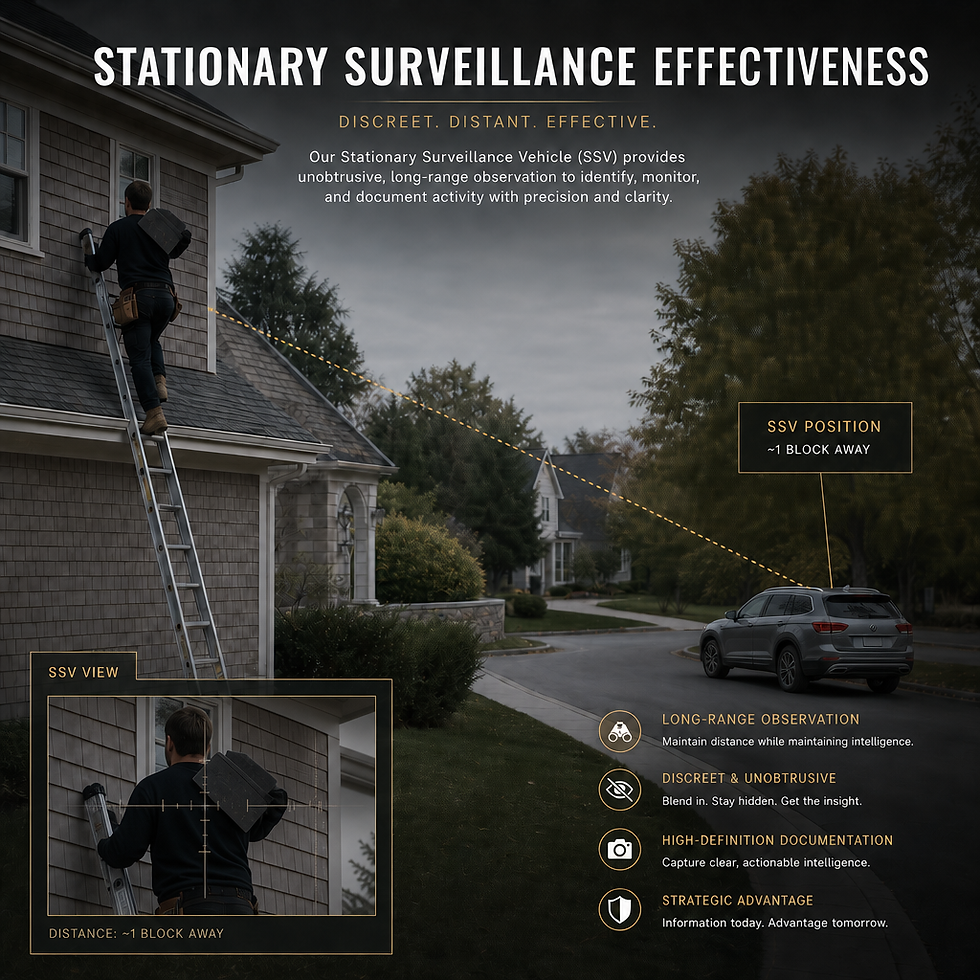
Surveillance is now less likely to trigger a bad‑faith claim
The DOL repeatedly emphasizes objective evidence and claimant credibility. Surveillance directly supports both.
Medical canvasses and background verification are treated as reasonable investigation
Cases like Lile and Witkop show that insurers are expected to verify treatment, medical necessity, and functional capacity.
IME reliance is reinforced as legitimate
This undermines a common plaintiff‑attorney argument that IMEs are inherently biased.
The burden on claimants to prove insurer unreasonableness is now higher
The DOL’s consistent validation of insurer decision‑making makes speculative bad‑faith filings far less viable.
The rulings align with the Supreme Court’s long‑standing standard
Bad faith requires an unreasonable denial—not the use of investigative tools.
Conclusion
The 2024–2025 workers’ compensation decisions show a clear judicial trend:
Insurers who investigate thoroughly, document decisions, and rely on objective evidence are protected.
This means:
covert surveillance,
medical canvasses,
background checks,
activity verification,
and IME‑supported decisions
are less likely than ever to be twisted into bad‑faith allegations.
For claims managers, this is a green light to resume normal investigative practices with confidence.
Citations
South Dakota Department of Labor & Regulation, Workers’ Compensation Case Decisions (HF No. 62, 61, 43, 98, 77).
Hein v. Acuity, 2007 S.D. 40.
Mordhorst v. Dakota Truck Underwriters, 2016 S.D. 70.


Comments